Brexit: why Britain left the EU, explained with a simple cartoon
August 12, 2021
TOK Teacher
Calls for reparations in the U.S. are generally met with skepticism: What would reparations achieve? Who should receive them, and under what conditions?
Other countries have tackled these questions. In 1995, South Africa established its Truth and Reconciliation Commission and paid reparations to the victims of apartheid. Eight years before, the United States apologized to 82,000 Japanese Americans unduly imprisoned during World War II and paid them US$20,000 each to compensate for their suffering.
Any civilised society must try to punish such horrors. But in ending internal conflicts, peace, reconciliation and truth are as important as justice. There is often a trade-off. Rebels and dictators often refuse to give up unless they are promised amnesty. Moral imperative is thus tempered by political feasibility. And the politics is not getting much easier.
https://www.economist.com/the-americas/2019/06/29/are-amnesties-in-latin-america-always-a-bad-idea
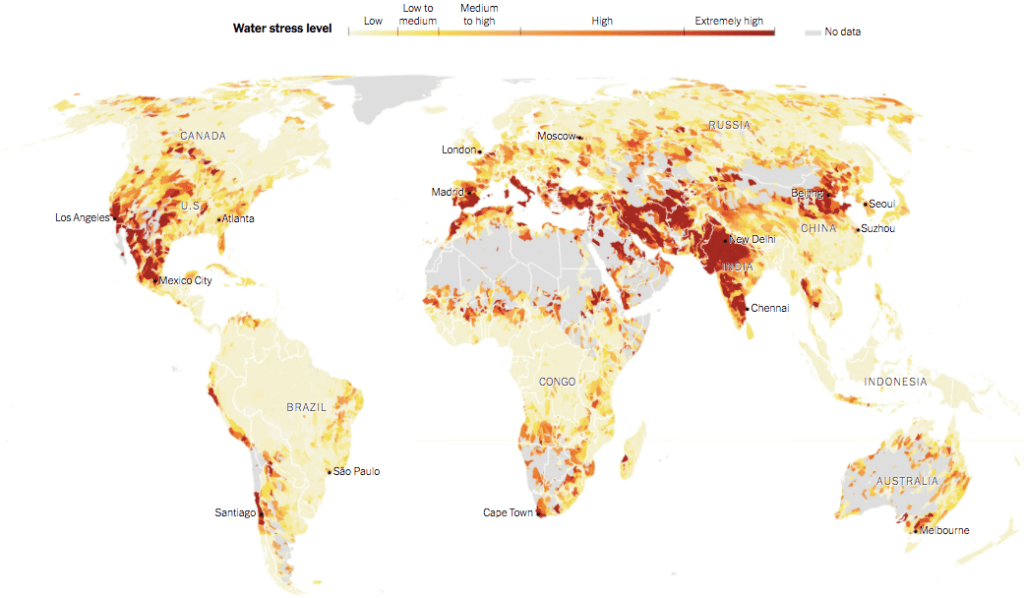
This inquiry leads students through an investigation of water access in the Middle East using various sources that consider geographical, political and economic issues. By investigating the compelling question, students examine the geography of the region, including environmental and demographic relationships, the ecological impact of accessing water, and the subsequent political conflicts over control of natural resources. By completing this inquiry, students begin to understand issues revolving around access and control of resources, such as the consequences of power struggles that befall countries with limited access to water resources.
Jimmy was born in mainland China. In 1960, when he was 12 years old, he snuck out of China and into Hong Kong by hiding in the bottom of a fishing boat. The day he got to Hong Kong, he got a job in a factory. By the time he was 21, he was running a factory. Today, he’s one of the richest people in Hong Kong. He’s also one of the most vocal critics of the Chinese government, and a major figure in Hong Kong’s protest movement.
Jimmy Lai’s story is the story of Hong Kong. And Hong Kong’s story is the story of the 200-year-long history of China and with the West — a story of communism, colonialism, and capitalism.
https://www.npr.org/2019/07/19/743480237/episode-928-hong-kong

 An IB Global Politics Site