The Syrian conflict has torn the country apart, leaving thousands dead and driving millions to flee their homes. Many seek refuge in neighbouring countries but others pay traffickers to take them to Europe – risking death, capture and deportation.
If you were fleeing Syria for Europe, what choices would you make for you and your family? Take our journey to understand the real dilemmas the refugees face.
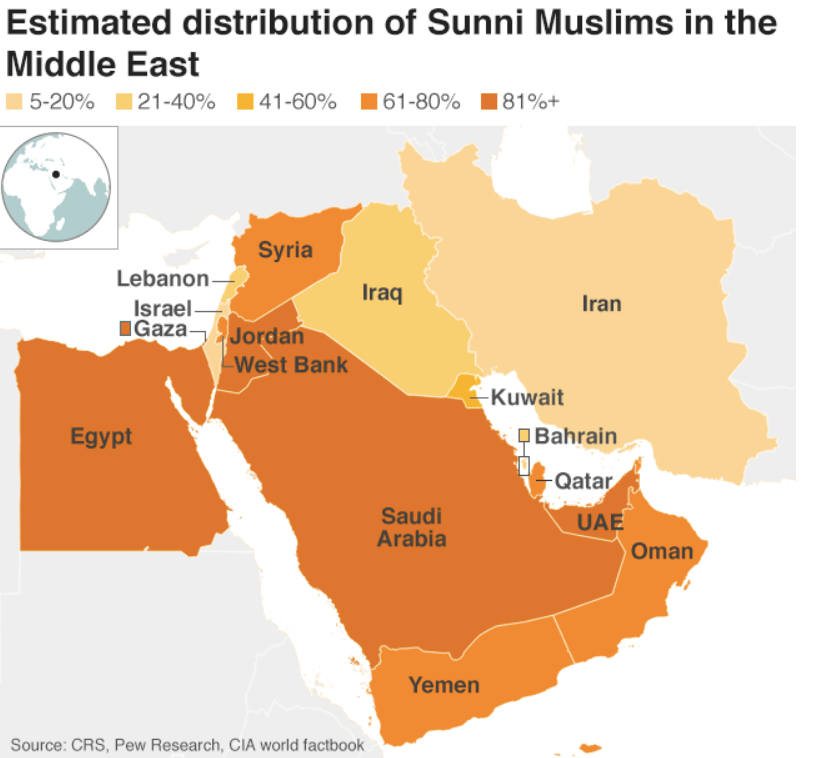
The decades-old feud between them is exacerbated by religious differences. They each follow one of the two main branches of Islam – Iran is largely Shia Muslim, while Saudi Arabia sees itself as the leading Sunni Muslim power.
Israeli occupation turns 50: A Palestinian’s commute through Checkpoint 300
Occupied: Year 50 | Israel’s military occupation of the West Bank and Gaza began five decades ago, when Israel defeated three Arab armies. Today, millions of Palestinians still face concrete walls, checkpoints and other Israeli controls. What does it feel like to be “occupied” in 2017? The lives of three people – a construction worker, a cancer patient and a tycoon – offer some answers.
The Arab World Has Never Recovered From the Loss of 1967
Fifty years after Azm and other Arab intellectuals started to mercilessly deconstruct their ossified political orders, reactionary and primitive religious structures, and stagnant societies, the Arab world has descended further into darkness. Physical, intellectual, and political desolation has claimed many of the once lively metropolises of the Arab region — Damascus, Aleppo, Baghdad, Mosul, Cairo, and Alexandria — with only Beirut still resisting, albeit teetering on the edge. For centuries, these cities constituted a rich human and linguistic mosaic of ancient communities including Muslims, Christians, Jews, Druze, Arabs, Kurds, Assyrians, and Circassians. In modern times, they were joined by Greek, Armenian, and Italian communities. A vibrant cosmopolitanism found home in the port cities of Alexandria and Beirut and the cities of the hinterland, such as Aleppo, Damascus, and Baghdad.
Is there any moral distinction between a political refugee and an economic migrant? If people have the right to exit a country, why not a right to enter? Do nations have the right to protect the affluence of their citizens? And is there such a thing as a ‘national identity’?
These are just some of the questions addressed by Prof Sandel in this first edition of The Global Philosopher.
Is the international order capable of meeting the enormous challenges facing states and societies around the world? We look at the four main challenges facing International Geneva.
The coronavirus pandemic should have been a moment for global action. Instead, the U.N. is riven with dissension and self-doubt, and countries are going their own way.
Unlike nearly six years ago, when the Security Council declared Ebola a threat to world peace and security, a disease that doesn’t respect borders is no longer enough to push feuding world powers — the United States, China and Russia — to use the U.N. stage to coordinate a political response. China, which held the Security Council presidency in March, when the illness was declared a pandemic and began to overwhelm some European and American health systems, did not call a meeting on it. The U.S., increasingly guided by President Donald Trump’s America First views, has not stepped up at the U.N., feeding the sense that the world body is hobbled, if not utterly paralyzed by the very kind of crisis it was meant to address.
What caused the conflict in Syria, and how should the international community respond?
The Syrian Civil War and resulting refugee crisis is one of the defining humanitarian issues of our time. Since 2011, the violence of the conflict has prompted about half of the country’s population to flee from their homes—nearly seven million refugees have fled the country and more than six million Syrians are internally displaced. The war has claimed the lives of hundreds of thousands of civilians and injured more than a million people. The Syrian Civil War provides students with the historical basis to understand the recent conflict, exploring the legacies of colonialism, sectarianism, and authoritarianism that continue to shape the country today. Throughout the curriculum, students explore how Syrian social movements and resistance have shaped the country’s history, considering the experiences and perspectives of Syrians from the past to the present. The unit is divided into three parts. Each part includes:


 An IB Global Politics Site