After nearly seven years and hundreds of thousands of deaths, the war in Syria continues to defy attempts at a resolution, and it has reached a new level of intensity in recent weeks.
The definition of a people is much disputed, but some might argue that it means a permanent population with a concept of, and belief in, their own nationality.
The European Union is the West’s last line of defense. The United States has historically been the world’s anchor of republican ideals, but President Trump has abandoned the role, openly admiring strongmen like Vladimir Putin of Russia. As the temptations of nationalist populism spread, Europe has responsibility for holding down the Western fort. The primary battle right now is over Poland, which is deepening its descent into illiberalism. The European Union needs to take a firm stand in defense of Western values.
LONDON — The recent independence referendums in Iraqi Kurdistan and Catalonia, and the predictable heavy-handed responses from the central governments in Baghdad and Madrid, have raised many questions — a catechism without answers — on the meaning of nationhood in the 21st century. What is a nation? What is a nation-state? Is it the same as a country? Are a people, or a tribe, the same thing as a nation? In a globalized economy what does national sovereignty really mean?
The European Union requires some sort of counterbalance, which depends on states the size of Spain.
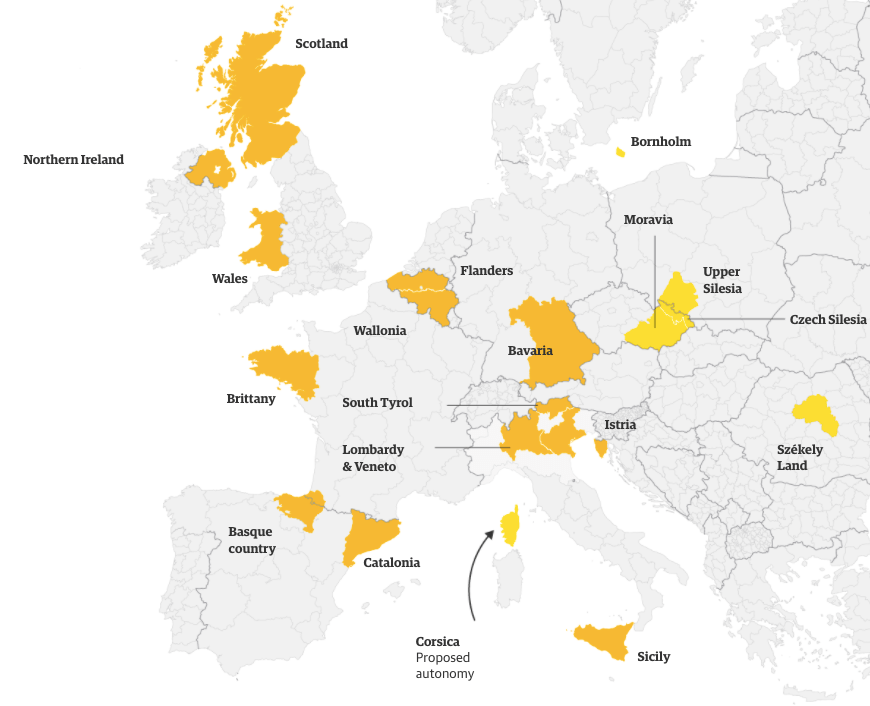
Never in its history has Europe been kinder to its little tribes clamoring for their own little desks in Brussels and at the United Nations. Mr. Rajoy was accused of harshly suppressing the illegal “referendum,” in which a minority of Catalans cast ballots in favor of independence. Nearly 900 people were injured in scuffles with police.
But if you want harsh, the Irish could tell you a thing or two about how Europe used to treat separatists. The Dutch had to war with the Spanish for 80 years to secure their independence from the Hapsburgs in the 16th and 17th centuries. A violent separatist cause and the violent counterreaction catalyzed the war that nearly destroyed Europe starting in 1914.
President Trump went to Manhattan this past week to meet with world leaders at the annual U.N. General Assembly. In a speech that featured a threat to destroy North Korea, he also lambasted the international nuclear deal with Iran while sprinkling in praise for the United Nations’ ideals and some of its activities. But the address, and the reactions to it, reflected misperceptions about what multilateral organizations really do. Here are five of the most persistent errors.
Small states are more likely to be perceived as neutral, trustworthy and compliant value-creators in negotiations.
Small states are certainly disadvantaged in the international system. Having a small population inherently inhibits the aggregate structural power of that state, as well as creating hurdles that need to be compensated for and unique needs that have to be fulfilled. Small states are geographically and economically diverse, and thus face different challenges in terms of security and welfare. Nonetheless, they all have to compensate for size-related problems and meet needs that are inherent to their smallness.
The repercussions of the post-national ideology that (re-)emerged in the 1980s, and then became all-pervasive in the 1990s and 2000s, are still being felt today. Conventional wisdom holds that that globalisation and the internationalisation of finance has ended the era of nation-states and their capacity to pursue policies that are not in accord with the diktats of global capital. But does the evidence support the assertion that national sovereignty, which so often throughout the twentieth century has been wrongly proclaimed dead, has truly reached the end of its days?
 An IB Global Politics Site