Indicator Podcasts on Water Scarcity

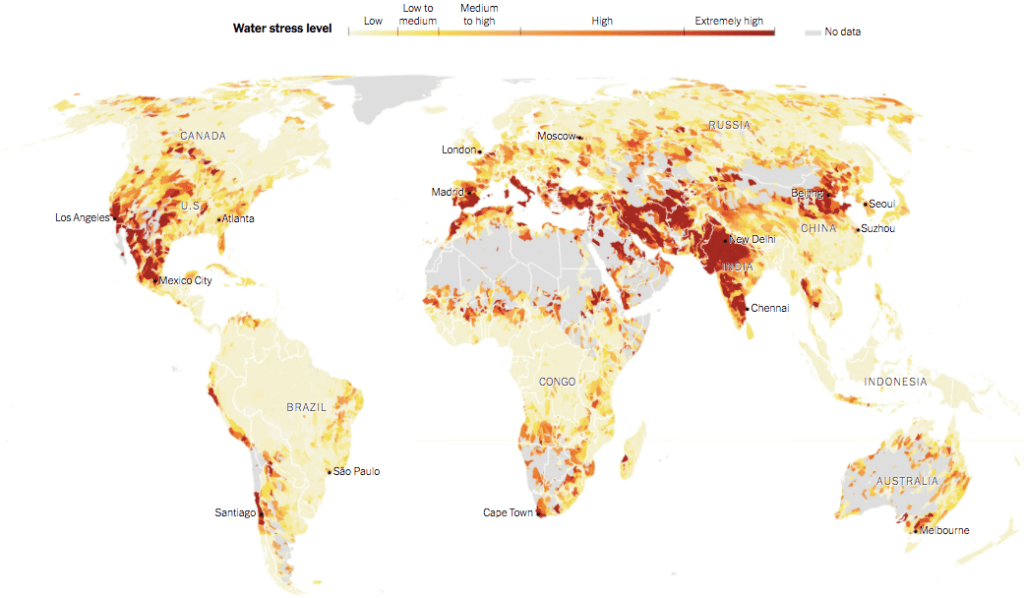
Here is a series of four 9 minute podcasts exploring different aspects of water security, scarcity, access, and other related issues. This topic provides great connections to HLX concepts like Health, Environment, Borders, and Security along with issues related to economic development.

Here are some other articles under the category of “water”

Water In The West: Bankrupt?

https://www.npr.org/2021/08/30/1032609785/water-in-the-west-bankrupt

Liquid Markets

https://www.npr.org/2021/08/31/1032979418/liquid-markets

Water’s Cheap… Should It Be?

https://www.npr.org/2021/09/01/1033338725/waters-cheap-should-it-be

Should The Lawns In Vegas, Stay In Vegas?

https://www.npr.org/2021/09/02/1033748480/should-the-lawns-in-vegas-stay-in-vegas
Why it Matters Podcast: Water Scarcity

Fresh water is more than just a resource, it is the source of all life. But in many arid regions of the world, water supplies are under pressure from climate change, and outdated rules and infrastructure are making the problem worse. What does the world need to know about water consumption, and how can societies build better systems for a dryer future?   Featured Guests:  Mark Giordano (Professor of Geography and Cinco Hermanos Chair in Environment and International Affairs, Georgetown University)  Sandra Postel (Founder and Director, Global Water Policy Project)  

cfr.org/podcasts/water-scarcity

For Thousands of Years, Egypt Controlled the Nile. A New Dam Threatens That.

Ethiopia is staking its hopes on its $4.5 billion hydroelectric dam. Egypt fears it will cut into its water supplies. President Trump is mediating.

The dispute between Egypt and Ethiopia over the $4.5 billion Grand Ethiopian Renaissance Dam — Africa’s largest, with a reservoir about the size of London — has become a national preoccupation in both countries, stoking patriotism, deep-seated fears and even murmurs of war.

Unit Plan: The Cost of Water

This inquiry leads students through an investigation of water access in the Middle East using various sources that consider geographical, political and economic issues. By investigating the compelling question, students examine the geography of the region, including environmental and demographic relationships, the ecological impact of accessing water, and the subsequent political conflicts over control of natural resources. By completing this inquiry, students begin to understand issues revolving around access and control of resources, such as the consequences of power struggles that befall countries with limited access to water resources.

http://c3teachers.org/inquiries/cost-of-water/

Drip, Jordan: Israel’s water war with Palestine ($)

To be honest, there is no Jordan River. There hasn’t been one since the mid-1960s, when Israel diverted the waters of Lake Tiberias into the National Water Carrier and thence to the coast and, famously, to the southern desert, that it might bloom. In the rush to control the region’s water resources, the Jordanians diverted the Yarmouk, which flows into the Jordan. The slender trickle that carries the name is composed largely of agricultural runoff and untreated sewage. What once was water, holy water, is now toxic sludge.

https://harpers.org/archive/2011/12/drip-jordan/