The European Union Explained*
August 11, 2021
TOK Teacher
As hordes of experts and analysts fumble through the politics of the Rohingya crisis misrepresenting it as a communal or religious problem, the state and its sponsors conjure up ever more systematic and violent techniques to establish sovereignty over Myanmar’s problematized Rohingya. The Australian government has provided over AUS$5 million to Myanmar to help ‘strengthen border control’ with the aim of tackling ‘illegal cross border movement’. Myanmar government officials have made it clear that for the state it is the Rohingya who constitute the largest threat to sovereignty (Zarni & Cowley, 2014).
https://www.eurasiareview.com/22122015-a-love-of-sovereignty-borders-bureaucracy-and-the-rohingya-crisis-analysis/
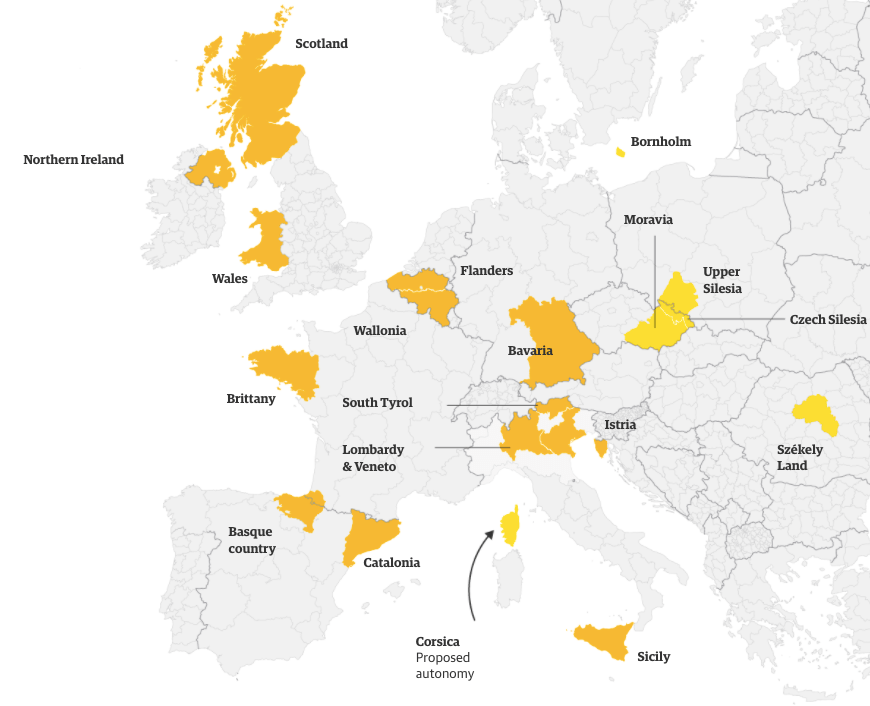
LONDON — The recent independence referendums in Iraqi Kurdistan and Catalonia, and the predictable heavy-handed responses from the central governments in Baghdad and Madrid, have raised many questions — a catechism without answers — on the meaning of nationhood in the 21st century. What is a nation? What is a nation-state? Is it the same as a country? Are a people, or a tribe, the same thing as a nation? In a globalized economy what does national sovereignty really mean?
Why are hundreds of thousands of Rohingya refugees fleeing Myanmar? Who are the Rohingya and why are they being persecuted? What responsibility does the world have to end what the United Nations is calling “ethnic cleansing” and many are labeling “genocide”?
In this lesson, students will first learn about the crisis unfolding in Myanmar using Times reporting, videos, podcasts and photography. Then, we suggest a variety of activities for going deeper, such as tackling universal questions about national identity and minority rights, considering the responsibility of the world community, and going inside the squalid refugee camps sprawling across the border in Bangladesh. And, we suggest ways students can take action and have their voices heard.
The European Union requires some sort of counterbalance, which depends on states the size of Spain.
Never in its history has Europe been kinder to its little tribes clamoring for their own little desks in Brussels and at the United Nations. Mr. Rajoy was accused of harshly suppressing the illegal “referendum,” in which a minority of Catalans cast ballots in favor of independence. Nearly 900 people were injured in scuffles with police.
But if you want harsh, the Irish could tell you a thing or two about how Europe used to treat separatists. The Dutch had to war with the Spanish for 80 years to secure their independence from the Hapsburgs in the 16th and 17th centuries. A violent separatist cause and the violent counterreaction catalyzed the war that nearly destroyed Europe starting in 1914.
https://www.wsj.com/articles/catalans-cant-stand-up-to-brussels-by-themselves-1507847142?mod=e2tw
President Trump went to Manhattan this past week to meet with world leaders at the annual U.N. General Assembly. In a speech that featured a threat to destroy North Korea, he also lambasted the international nuclear deal with Iran while sprinkling in praise for the United Nations’ ideals and some of its activities. But the address, and the reactions to it, reflected misperceptions about what multilateral organizations really do. Here are five of the most persistent errors.
Small states are more likely to be perceived as neutral, trustworthy and compliant value-creators in negotiations.
Small states are certainly disadvantaged in the international system. Having a small population inherently inhibits the aggregate structural power of that state, as well as creating hurdles that need to be compensated for and unique needs that have to be fulfilled. Small states are geographically and economically diverse, and thus face different challenges in terms of security and welfare. Nonetheless, they all have to compensate for size-related problems and meet needs that are inherent to their smallness.
https://nationalinterest.org/feature/the-small-state-survival-guide-foreign-policy-success-22526
The repercussions of the post-national ideology that (re-)emerged in the 1980s, and then became all-pervasive in the 1990s and 2000s, are still being felt today. Conventional wisdom holds that that globalisation and the internationalisation of finance has ended the era of nation-states and their capacity to pursue policies that are not in accord with the diktats of global capital. But does the evidence support the assertion that national sovereignty, which so often throughout the twentieth century has been wrongly proclaimed dead, has truly reached the end of its days?
To be honest, there is no Jordan River. There hasn’t been one since the mid-1960s, when Israel diverted the waters of Lake Tiberias into the National Water Carrier and thence to the coast and, famously, to the southern desert, that it might bloom. In the rush to control the region’s water resources, the Jordanians diverted the Yarmouk, which flows into the Jordan. The slender trickle that carries the name is composed largely of agricultural runoff and untreated sewage. What once was water, holy water, is now toxic sludge.
 An IB Global Politics Site