China Limited the Mekong’s Flow. Other Countries Suffered a Drought.
August 12, 2021
New research show that Beijing’s engineers appear to have directly caused the record low levels of water in Thailand, Laos, Cambodia and Vietnam.
New research show that Beijing’s engineers appear to have directly caused the record low levels of water in Thailand, Laos, Cambodia and Vietnam.
Interesting resource designed specifically for the IB Global Politics course.
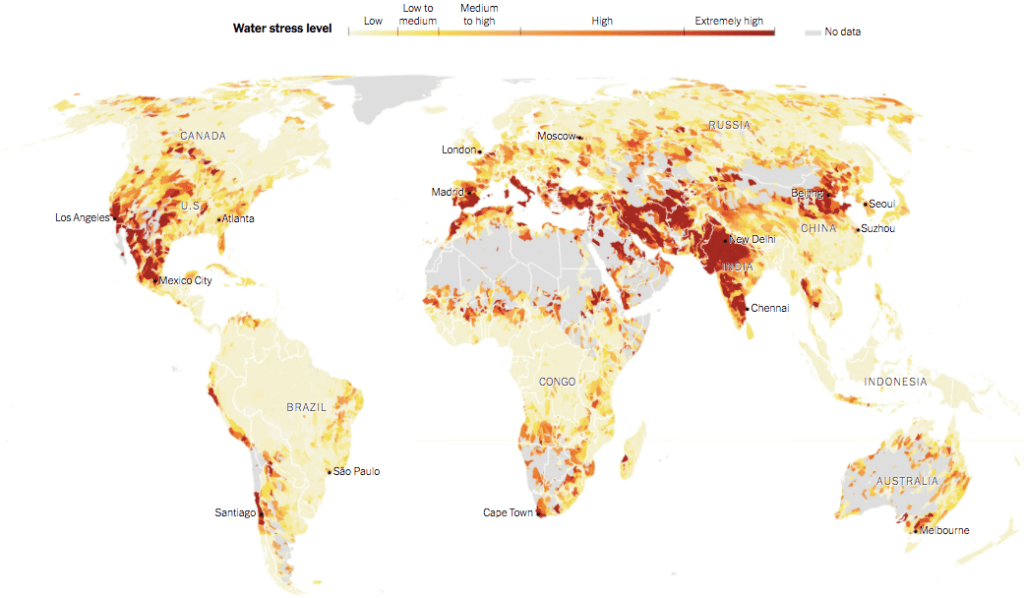
This inquiry leads students through an investigation of water access in the Middle East using various sources that consider geographical, political and economic issues. By investigating the compelling question, students examine the geography of the region, including environmental and demographic relationships, the ecological impact of accessing water, and the subsequent political conflicts over control of natural resources. By completing this inquiry, students begin to understand issues revolving around access and control of resources, such as the consequences of power struggles that befall countries with limited access to water resources.
This report, based on interviews with over 60 people over two years, shows how officials within the Cambodian government, and CHNG and its subsidiaries, did not adequately consult with impacted communities and affected families before or during the construction of the Lower Sesan 2 dam. It documents how officials ignored communities’ concerns and objections, dismissed calls for discussion of alternative project designs, provided wholly inadequate compensation to impacted communities, and failed to set up an effective grievance mechanism to address disputes. Government and company officials made no attempt to obtain the “free, prior, and informed consent” of affected Indigenous peoples, as specified under the United Nations Declaration on the Rights of Indigenous Peoples.
(Above is the full report, below is a shorter news story about the report)
Almost a third of the alleged abuses recorded from 2013 to 2020 have taken place in Southeast Asia, including Myanmar, Laos, Cambodia and Indonesia.
Embracing human rights also has implications beyond the bank. It could set the bar for other development banks and help build borrowing countries’ capacity and support for human rights. On the other hand, there is the risk that the bank’s dilution of human rights standards can weaken existing rights. As the case of the Ethiopian cash-for-work program illustrates, discrimination on the basis of political opinion – or a person’s language – violates human rights but apparently not bank policy. It is a grim sign that the definition of discrimination in the United Nations’ proposed Sustainable Development Goals does not explicitly include discrimination against people for their political opinions or language.
https://www.huffpost.com/entry/-why-the-world-bank-shoul_b_7989002?utm_hp_ref=human-rights
The complaint alleges that the Anuak people have been severely harmed by the World Bank-financed and administered Protection of Basic Services Project (PBS), which has provided 1.4 billion USD in sectoral budget support for the provision of basic services to the Ethiopian Government since 2006. A legal submission accompanying the complaint, prepared by Inclusive Development International (IDI), presents evidence that the PBS project is directly and substantially contributing to a program of forced villagization, which has been taking place in the Gambella Region since 2010.
East African nation emerges from genocidal past with substantial growth, but critics question the numbers and what they say is President Paul Kagame’s authoritarian rule
Supporters and critics describe Mr. Kagame—a former rebel commander who now has 1.4 million followers on Twitter and hobnobs with Ellen DeGeneres and Bill Clinton —as a disciplinarian with little tolerance for the corruption that has plagued other African nations. In his early days in power, Mr. Kagame would go on drives through Kigali with the capital’s mayor, pointing out things that should be improved. The result is visible today on its palm-lined, trash- and pothole-free streets.
https://www.wsj.com/articles/rwanda-a-poster-child-for-development-with-a-dark-side-1541500201
Is aid just an extension of colonial economics?Or a lifeline for imperfect but necessary support systems? Firoze Manji and Pablo Yanguas go head to head on the thorny topic of development assistance.
Ecuador is the first country in the world to include the rights of nature in its constitution and until the Yasuni controversy it was considered one of the most environmentally-progressive countries. To reduce criticism, Correa promised that only 1/1000th of the area of the Yasuni park would be exploited and the best available technology would be used to reduce pollution.
 An IB Global Politics Site