Justice & Human Rights Lessons from Facing History

The rule of law presents a path for nations to create a just and humane world. Our resources on human rights examine international systems of justice developed in response to mass violence, past and present. These encompass struggles around racism, religious intolerance, national origin, gender and sexuality, and sexual expression.

https://www.facinghistory.org/topics/justice-human-rights

Aung San Suu Kyi has gone from hero to villain

The committee that awarded the Nobel peace prize to Aung San Suu Kyi in 1991 described her as “an important symbol in the struggle against oppression” and an inspiration to those “striving to attain democracy, human rights and ethnic conciliation by peaceful means”. But to the crowd of protesters who gathered outside the International Court of Justice (icj) in The Hague this week, she is just the opposite: an apologist for military brutality, an oppressor of ethnic minorities and an abettor of genocide. “Aung San Suu Kyi, shame on you!” they chanted. As her motorcade glided past, windows tinted, the jeers and boos rose in a crescendo.

https://www.economist.com/asia/2019/12/12/aung-san-suu-kyi-has-gone-from-hero-to-villain?cid1=cust/ednew/n/bl/n/2019/12/12n/owned/n/n/nwl/n/n/NA/360197/n

The Moral Logic of Humanitarian Intervention

Samantha Power made a career arguing for America’s “responsibility to protect.” During her years in the White House, it became clear that benevolent motives can have calamitous results.

The book inspired a generation of activists, helping to establish the doctrine of “responsibility to protect,” which held that the United States and other wealthy countries had an obligation to defend threatened populations around the world. It also made a star of its author, a charismatic, cracklingly smart presence who urged others to take up the cause. “Know that history is not in a hurry but that you can help speed it up,” she told Yale’s graduating class of 2016. “It is the struggle itself that will define you. Do that, and you will not only find yourself fulfilled but you, too, will live to see many of your lost causes found.”

https://www.newyorker.com/magazine/2019/09/16/the-moral-logic-of-humanitarian-intervention

Unit Plan: The Cost of Water

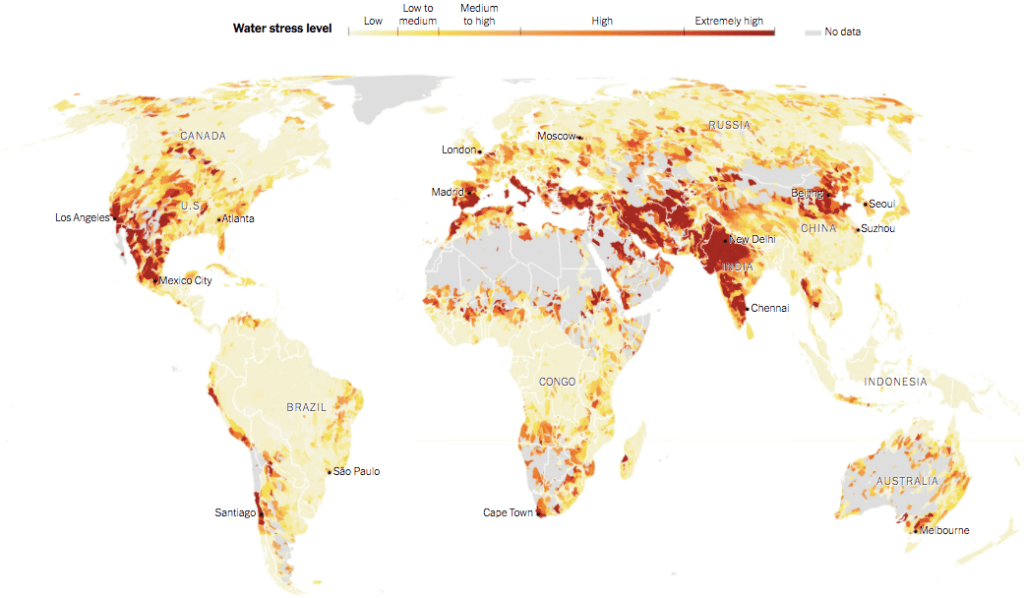
This inquiry leads students through an investigation of water access in the Middle East using various sources that consider geographical, political and economic issues. By investigating the compelling question, students examine the geography of the region, including environmental and demographic relationships, the ecological impact of accessing water, and the subsequent political conflicts over control of natural resources. By completing this inquiry, students begin to understand issues revolving around access and control of resources, such as the consequences of power struggles that befall countries with limited access to water resources.

http://c3teachers.org/inquiries/cost-of-water/

Planet Money Podcast: Hong Kong

Jimmy was born in mainland China. In 1960, when he was 12 years old, he snuck out of China and into Hong Kong by hiding in the bottom of a fishing boat. The day he got to Hong Kong, he got a job in a factory. By the time he was 21, he was running a factory. Today, he’s one of the richest people in Hong Kong. He’s also one of the most vocal critics of the Chinese government, and a major figure in Hong Kong’s protest movement.

Jimmy Lai’s story is the story of Hong Kong. And Hong Kong’s story is the story of the 200-year-long history of China and with the West — a story of communism, colonialism, and capitalism.

https://www.npr.org/2019/07/19/743480237/episode-928-hong-kong

Underwater: Human Rights Impacts of a China Belt and Road Project in Cambodia

This report, based on interviews with over 60 people over two years, shows how officials within the Cambodian government, and CHNG and its subsidiaries, did not adequately consult with impacted communities and affected families before or during the construction of the Lower Sesan 2 dam. It documents how officials ignored communities’ concerns and objections, dismissed calls for discussion of alternative project designs, provided wholly inadequate compensation to impacted communities, and failed to set up an effective grievance mechanism to address disputes. Government and company officials made no attempt to obtain the “free, prior, and informed consent” of affected Indigenous peoples, as specified under the United Nations Declaration on the Rights of Indigenous Peoples.

https://www.hrw.org/report/2021/08/10/underwater/human-rights-impacts-china-belt-and-road-project-cambodia

(Above is the full report, below is a shorter news story about the report)

Alleged abuses linked to China’s ‘Belt and Road’ projects: report

Almost a third of the alleged abuses recorded from 2013 to 2020 have taken place in Southeast Asia, including Myanmar, Laos, Cambodia and Indonesia.

https://www.aljazeera.com/news/2021/8/11/china-belt-and-road-dam-a-rights-disaster-for-cambodia-report
Why the World Bank Should Embrace Human Rights

Embracing human rights also has implications beyond the bank. It could set the bar for other development banks and help build borrowing countries’ capacity and support for human rights. On the other hand, there is the risk that the bank’s dilution of human rights standards can weaken existing rights. As the case of the Ethiopian cash-for-work program illustrates, discrimination on the basis of political opinion – or a person’s language – violates human rights but apparently not bank policy. It is a grim sign that the definition of discrimination in the United Nations’ proposed Sustainable Development Goals does not explicitly include discrimination against people for their political opinions or language.

https://www.huffpost.com/entry/-why-the-world-bank-shoul_b_7989002?utm_hp_ref=human-rights

Ethiopian Indigenous People Demand Accountability from World Bank for Contributing to Grave Human Rights Abuses

The complaint alleges that the Anuak people have been severely harmed by the World Bank-financed and administered Protection of Basic Services Project (PBS), which has provided 1.4 billion USD in sectoral budget support for the provision of basic services to the Ethiopian Government since 2006. A legal submission accompanying the complaint, prepared by Inclusive Development International (IDI), presents evidence that the PBS project is directly and substantially contributing to a program of forced villagization, which has been taking place in the Gambella Region since 2010.