The Coming Carbon Tsunami

Developing Countries Need a New Growth Model—Before It’s Too Late

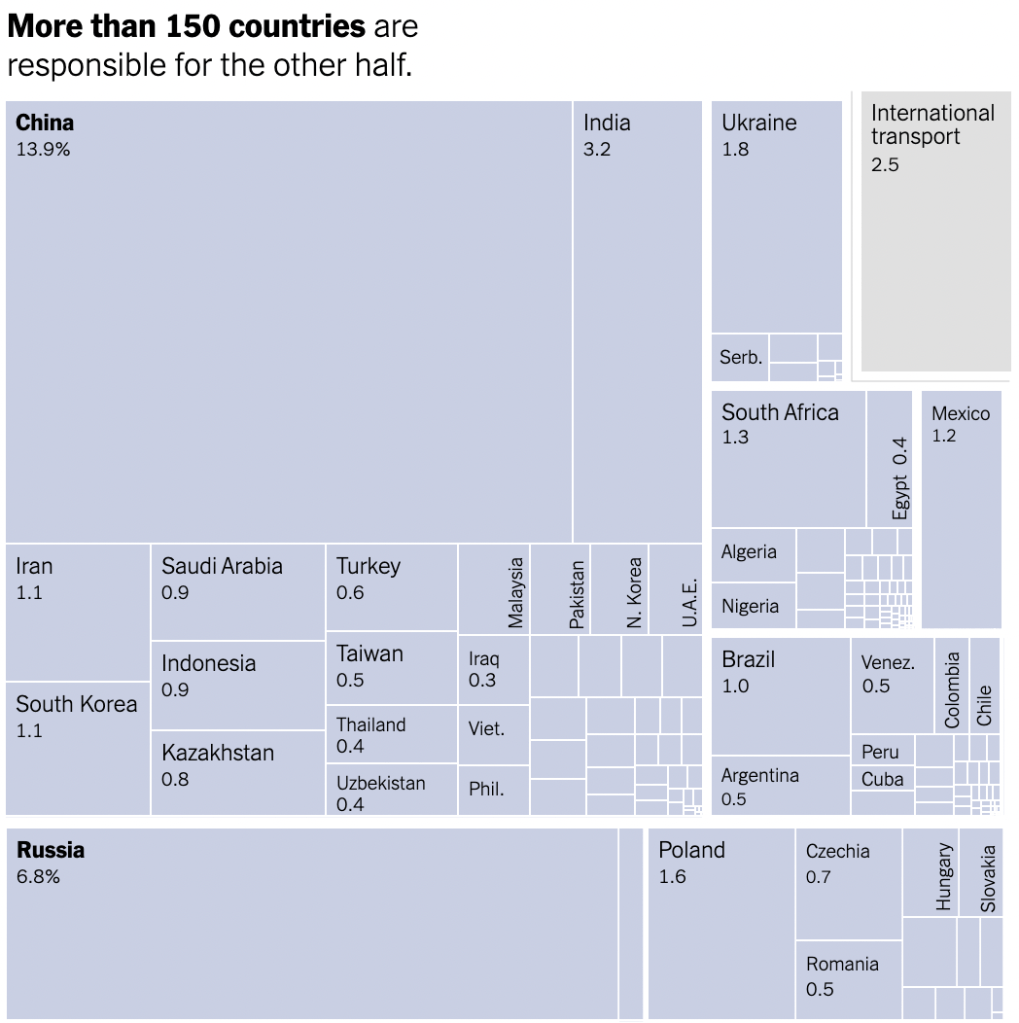
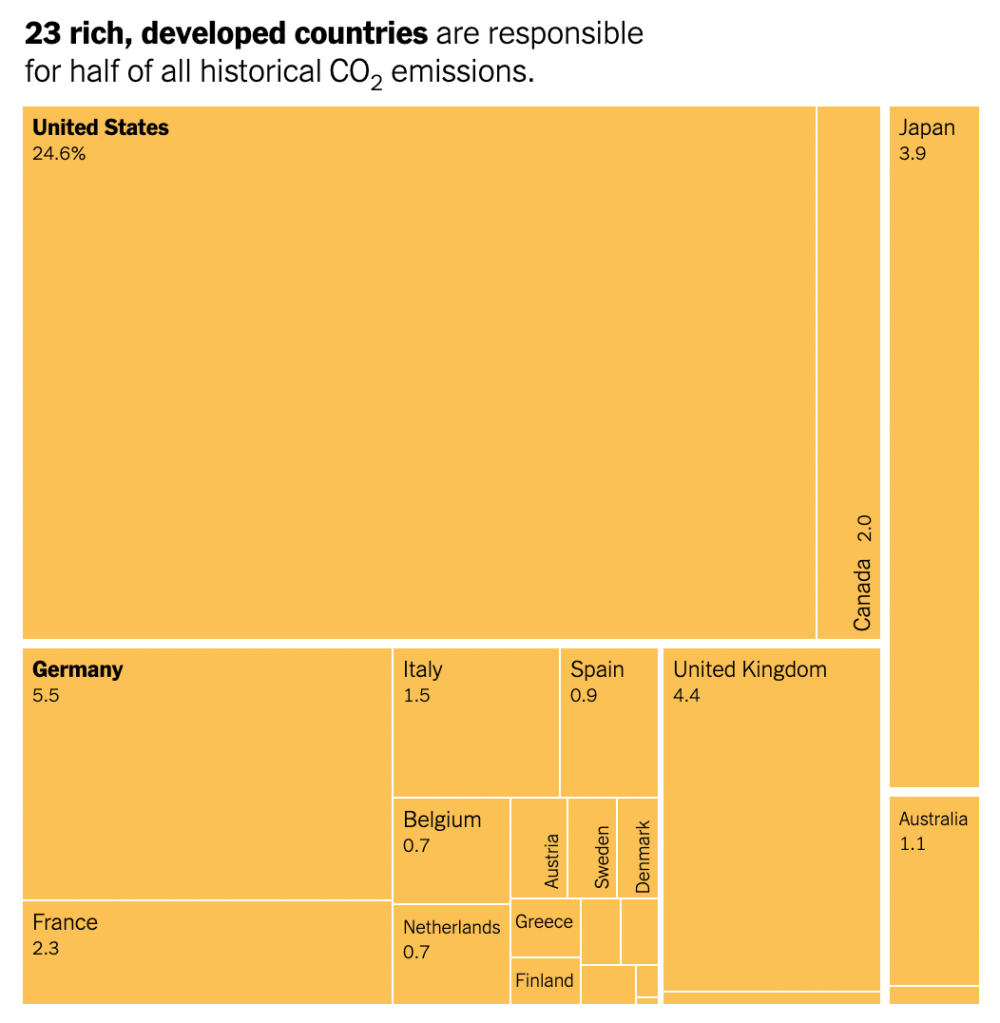
Citizens of the world’s least developed countries have the same aspirations for economic prosperity as citizens of China, Germany, or the United States do. Those who argue that the only way to combat climate change is to reduce economic growth miss the fundamental unfairness of global economic development, which has left a third of the world’s population behind. Yet if developing countries follow the “grow first and clean up later” pattern established by the United States, western Europe, and East Asian countries, the consequences for the climate will be catastrophic.

https://www.foreignaffairs.com/articles/world/2021-12-14/coming-carbon-tsunami

Related images from the NYTimes
Where Will Everyone Go?

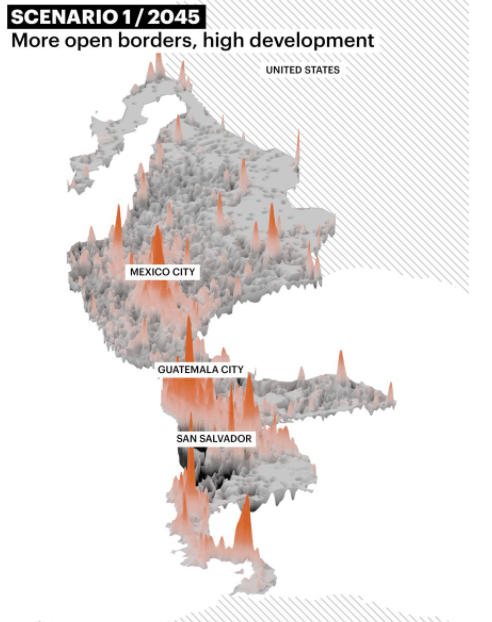
ProPublica and The New York Times Magazine, with support from the Pulitzer Center, have for the first time modeled how climate refugees might move across international borders. This is what we found.

Scientists have learned to project such changes around the world with surprising precision, but — until recently — little has been known about the human consequences of those changes. As their land fails them, hundreds of millions of people from Central America to Sudan to the Mekong Delta will be forced to choose between flight or death. The result will almost certainly be the greatest wave of global migration the world has seen.

https://features.propublica.org/climate-migration/model-how-climate-refugees-move-across-continents/

The Inquiry Podcast: How soon can we go carbon zero?

This month activists all over the world have taken over city centres, demanding urgent action to halt climate change. They say we need to eliminate all carbon emissions by 2025. Most people think that’s impossible. But scientists are warning that if we want to stop global warming, we need to cut our CO2 emissions fast. So how soon can the planet achieve carbon zero?

Part 3 of this episode, titled, “Out of Africa” (starting at 11:22), does a great job discussing the issue of energy use and development and the challenges of who pays the cost of reducing carbon emissions.

From that section, “How do we tackle this monstrous problem of climate change without exacerbating the problem of global poverty and inequality?” Do developed nations have a responsibility to help subsidize the development of developing nations in order to make sure their development is “clean”?

https://www.bbc.co.uk/programmes/w3csytgx