This lesson examines the crisis in Ukraine. First, students hold a brief discussion on what they think is the most important news story going on. Then they read and discuss a background piece on the crisis in Ukraine. Next, in small groups, they role play international lawyers and analyze Ukraine’s 1994 Budapest Memorandum, an agreement among Ukraine, Russia, the U.S., and the U.K.
China is believed to spend billions of dollars to boost its international image, but it has yet to see a marked return on its investment in soft power.
China is a powerful international actor as the world’s most populous country and its second-largest economy. The country also invests significantly in modernizing its military. With signs that the United States will retreat from a leadership role under the Trump administration, China has positioned itself as a champion of globalization and economic integration, perhaps signaling a desire to step in as a greater international leader. It is doing this by doubling down on soft power, a measure of a country’s international attractiveness and its ability to influence other countries and publics.
The Syrian conflict has torn the country apart, leaving thousands dead and driving millions to flee their homes. Many seek refuge in neighbouring countries but others pay traffickers to take them to Europe – risking death, capture and deportation.
If you were fleeing Syria for Europe, what choices would you make for you and your family? Take our journey to understand the real dilemmas the refugees face.
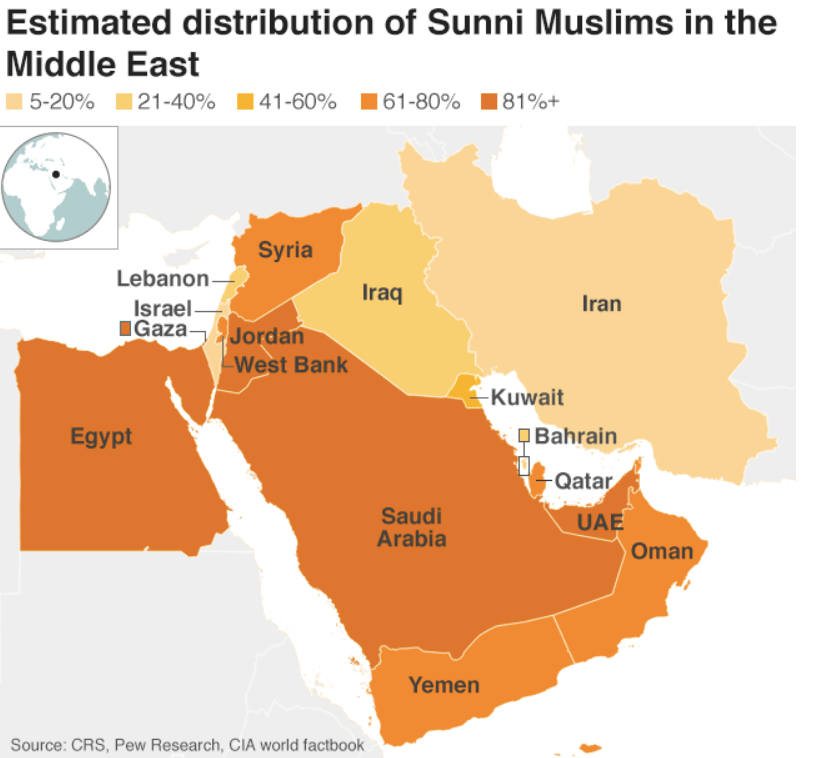
The decades-old feud between them is exacerbated by religious differences. They each follow one of the two main branches of Islam – Iran is largely Shia Muslim, while Saudi Arabia sees itself as the leading Sunni Muslim power.
Israeli occupation turns 50: A Palestinian’s commute through Checkpoint 300
Occupied: Year 50 | Israel’s military occupation of the West Bank and Gaza began five decades ago, when Israel defeated three Arab armies. Today, millions of Palestinians still face concrete walls, checkpoints and other Israeli controls. What does it feel like to be “occupied” in 2017? The lives of three people – a construction worker, a cancer patient and a tycoon – offer some answers.
The Arab World Has Never Recovered From the Loss of 1967
Fifty years after Azm and other Arab intellectuals started to mercilessly deconstruct their ossified political orders, reactionary and primitive religious structures, and stagnant societies, the Arab world has descended further into darkness. Physical, intellectual, and political desolation has claimed many of the once lively metropolises of the Arab region — Damascus, Aleppo, Baghdad, Mosul, Cairo, and Alexandria — with only Beirut still resisting, albeit teetering on the edge. For centuries, these cities constituted a rich human and linguistic mosaic of ancient communities including Muslims, Christians, Jews, Druze, Arabs, Kurds, Assyrians, and Circassians. In modern times, they were joined by Greek, Armenian, and Italian communities. A vibrant cosmopolitanism found home in the port cities of Alexandria and Beirut and the cities of the hinterland, such as Aleppo, Damascus, and Baghdad.
Venezuela was long one of the most prosperous countries in the region, with sophisticated manufacturing, vibrant agriculture and strong businesses, making it hard for many residents to accept such widespread scarcities. But amid the prosperity, the gap between rich and poor was extreme, a problem that Mr. Chávez and his ministers say they are trying to eliminate.
Podcast: Food Shortages At The Heart Of Venezuelan Economic And Political Crisis
Protesters blame the president for the country’s economic collapse and also for his tactics to hold on to power, suspending local elections, refusing to allow a recall referendum to go forward, attempting to rewrite the constitution and crackdowns on protesters.
Planet Money Podcast Episode 731: How Venezuela Imploded
Today on the show, we have an economic horror story about a country that made all the wrong decisions with its oil money. It’s a window into the fundamental way that money works and how when you try to control it, you can lose everything.
From Toms Shoes to international adoptions, from solar panels to U.S. agricultural subsidies, drawing from over 200 interviews filmed in 20 countries, Poverty, Inc. unearths an uncomfortable side of charity we can no longer ignore.

 An IB Global Politics Site