For more than two decades, the United Nations has led a fierce campaign against ‘Female Genital Mutilation’. And yet it still happens to millions of girls every year.
Venezuela was long one of the most prosperous countries in the region, with sophisticated manufacturing, vibrant agriculture and strong businesses, making it hard for many residents to accept such widespread scarcities. But amid the prosperity, the gap between rich and poor was extreme, a problem that Mr. Chávez and his ministers say they are trying to eliminate.
Podcast: Food Shortages At The Heart Of Venezuelan Economic And Political Crisis
Protesters blame the president for the country’s economic collapse and also for his tactics to hold on to power, suspending local elections, refusing to allow a recall referendum to go forward, attempting to rewrite the constitution and crackdowns on protesters.
Planet Money Podcast Episode 731: How Venezuela Imploded
Today on the show, we have an economic horror story about a country that made all the wrong decisions with its oil money. It’s a window into the fundamental way that money works and how when you try to control it, you can lose everything.
This month activists all over the world have taken over city centres, demanding urgent action to halt climate change. They say we need to eliminate all carbon emissions by 2025. Most people think that’s impossible. But scientists are warning that if we want to stop global warming, we need to cut our CO2 emissions fast. So how soon can the planet achieve carbon zero?
Part 3 of this episode, titled, “Out of Africa” (starting at 11:22), does a great job discussing the issue of energy use and development and the challenges of who pays the cost of reducing carbon emissions.
From that section, “How do we tackle this monstrous problem of climate change without exacerbating the problem of global poverty and inequality?” Do developed nations have a responsibility to help subsidize the development of developing nations in order to make sure their development is “clean”?
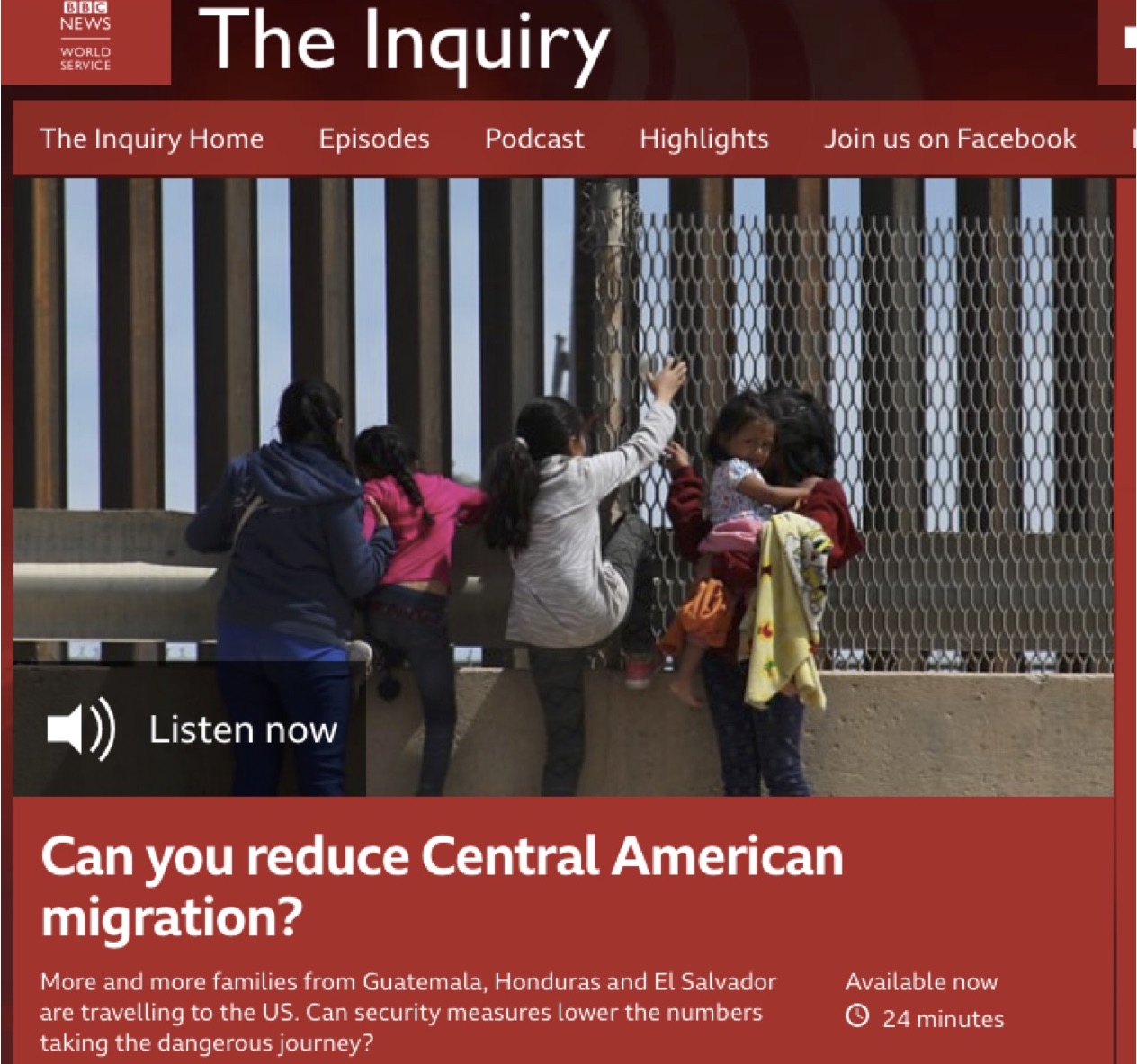
More and more families from Guatemala, Honduras and El Salvador are travelling to the US. Can security measures lower the numbers taking the dangerous journey?
The Root Causes Of Migration In Central American Countries
NPR’s Audie Cornish speaks with Shannon O’Neil, of the Council on Foreign Relations, about U.S. efforts to solve the root causes of migration in Central American countries.
 An IB Global Politics Site